57.628107264
3.5709125
327
Northeast Greenland Extreme - Aurora Borealis & Long Hikes
Expedition voyage from Akureyri to Longyearbyen along Northeast Greenland to the Northeast Water polynya.
On this 14 days/13 nights expedition aboard MS Hondius you travel from Iceland to Northeast Greenland, explore remote coasts and high Arctic waters, with very good northern lights chances and optional long hikes.
Tour ID: 1830772 Greenland, Spitzbergen, Iceland, Arctic, East Greenland, Svalbard Archipelago, High Arctic, Arctic Circle, Kalaallit Nunaat, Scoresby Sund, Northeast Greenland National Park ●●●●● 160 Reviews
14 days / 13 nights
Expedition ship m/v Hondius, m/v Ortelius
Kong Oscar Fjord with Wegener Halvøya and Antarctic Havn
Alpine fjords and Teufelschloss at Blomsterbugt
Isle de France with Independence II culture remains
Northeast Water polynya and Mallemukfjellet
Very good northern lights chances

Northeast Greenland Extreme: The itinerary
Day 1: Start in Iceland and embarkation in Akureyri
Your journey begins in the morning with travel to Akureyri. On request, you can use a charter bus transfer from the bus stop at Harpa Concert Hall and Conference Centre in Austurbakki, Reykjavík to the ship in Akureyri. The drive takes about six hours through North Iceland. Please note that this transfer must be booked and paid in advance. You arrive in Akureyri in the afternoon and embark on MS Hondius. In the early evening the ship departs. Whales are often seen near the fjord mouth, so sightings are possible already on this first leg. During the night you cross the Arctic Circle near the island of Grímsey while setting course for Northeast Greenland.
Day 2: Sea day with wildlife watching and northern lights
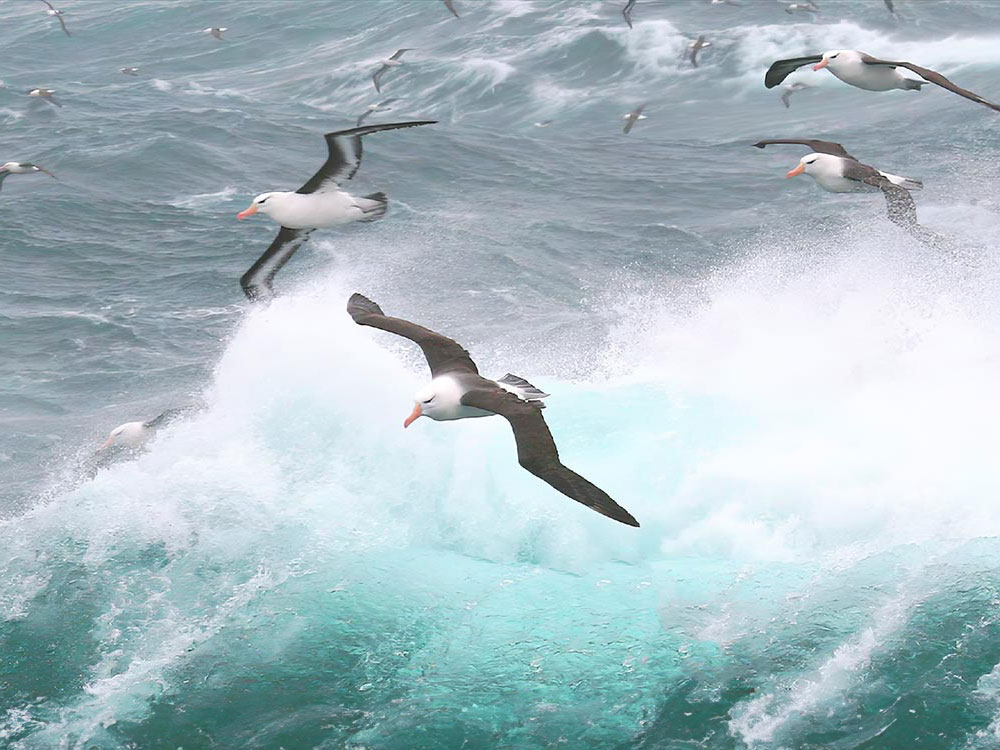
Today you sail north, initially following warmer waters before entering colder seas. In the mixing zones of these water masses, a wide range of marine life can occur, including whales, seals and seabirds. This is a sea day focused on observation from deck, depending on visibility and weather. It also provides time to settle into the expedition rhythm and receive information about upcoming landings. At night there are very good chances to see the northern lights, provided cloud cover and activity allow. The day therefore combines marine wildlife watching with attention to the night sky. Routing remains flexible to respond to sightings and conditions.
All pictures of this partner

 Erwin Vermeulen 2012 (13).jpg_Erwin Vermeulen.jpg)
 Erwin Vermeulen 2012 (15).jpg_Erwin Vermeulen.jpg)
 Erwin Vermeulen 2012 (36).jpg_Erwin Vermeulen.jpg)
 Erwin Vermeulen 2012 (77).jpg_Erwin Vermeulen.jpg)
 Erwin Vermeulen 2012 (78).jpg_Erwin Vermeulen.jpg)


Day 3: Kong Oscar Fjord, Wegener Halvøya or Antarctic Havn
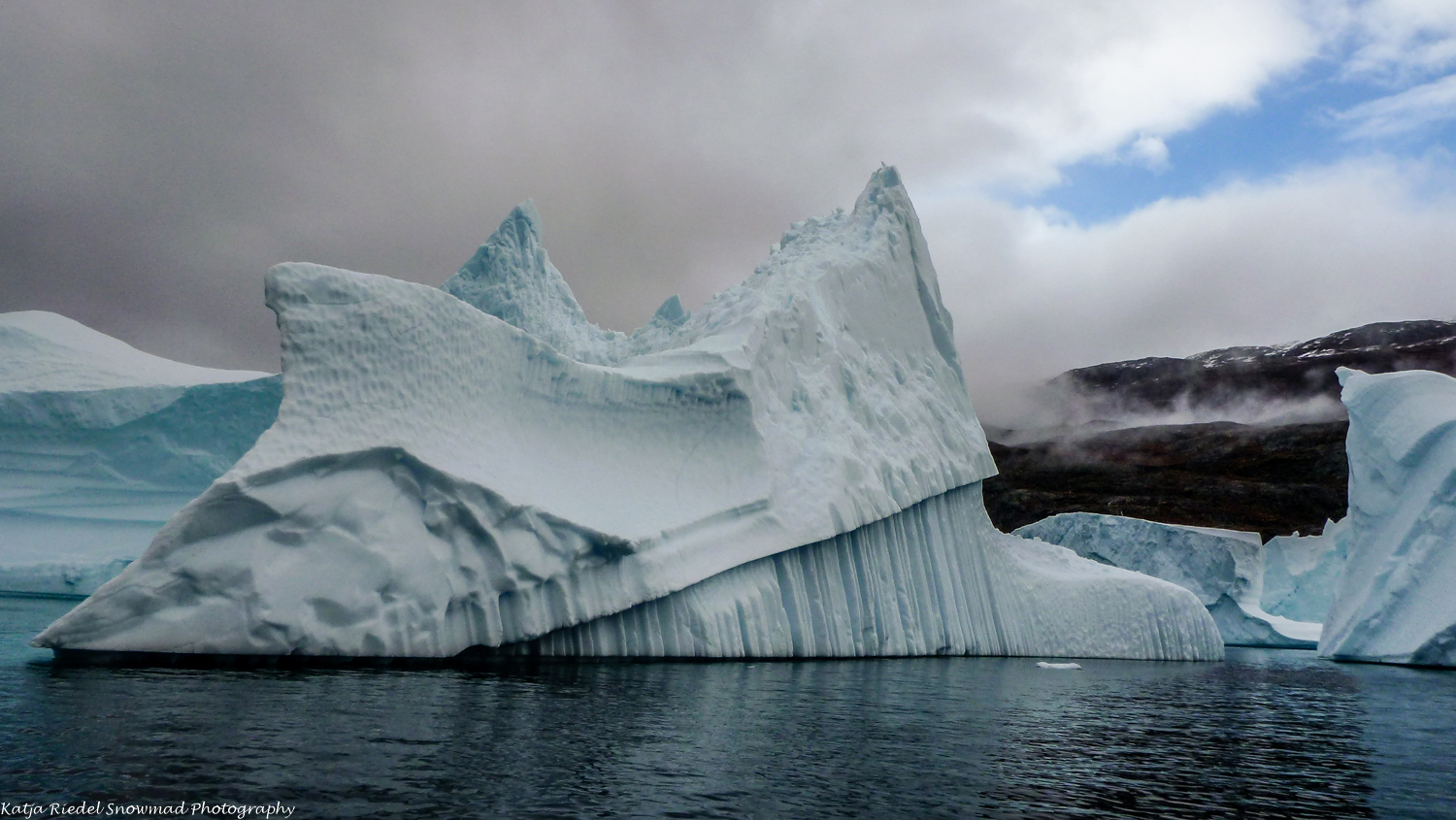
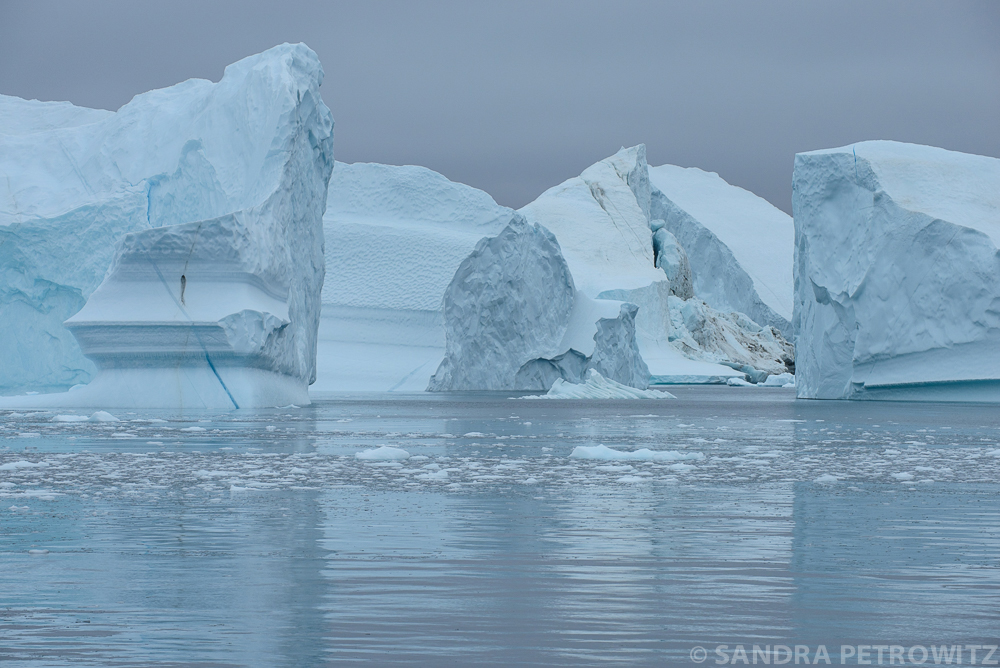
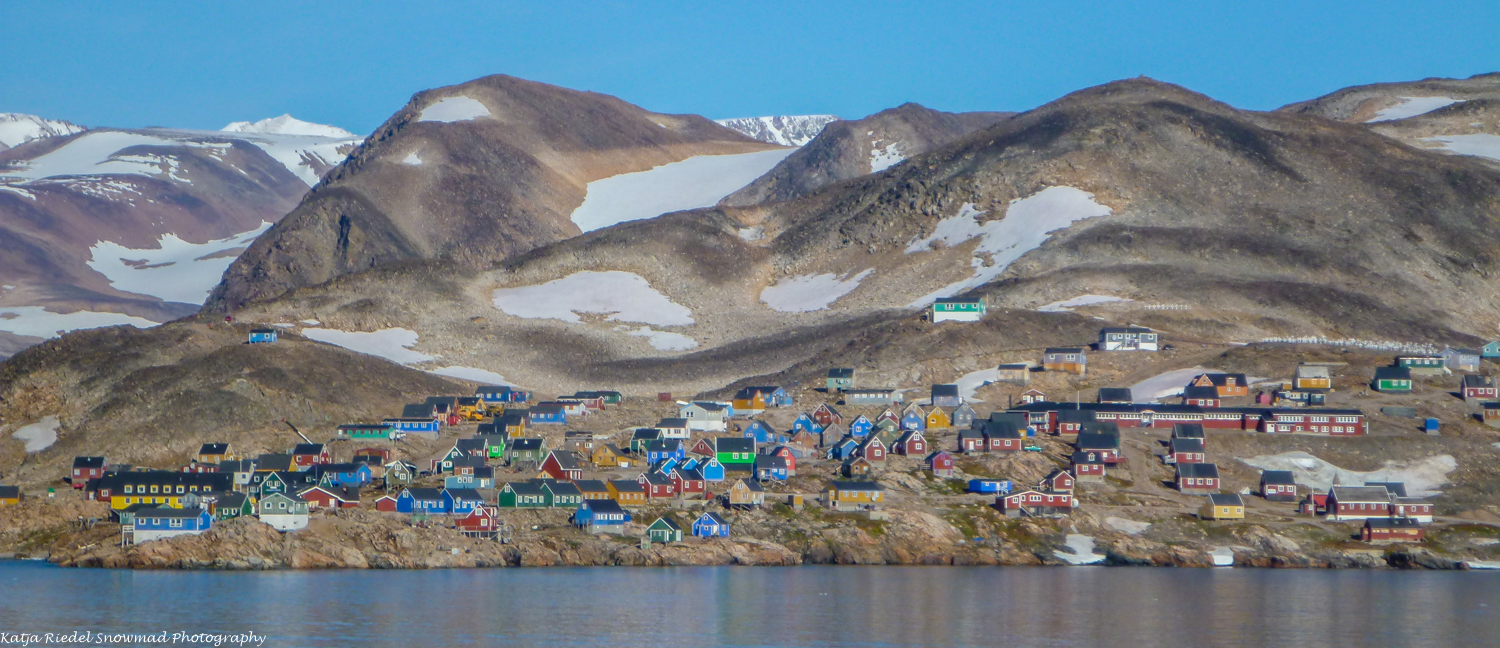
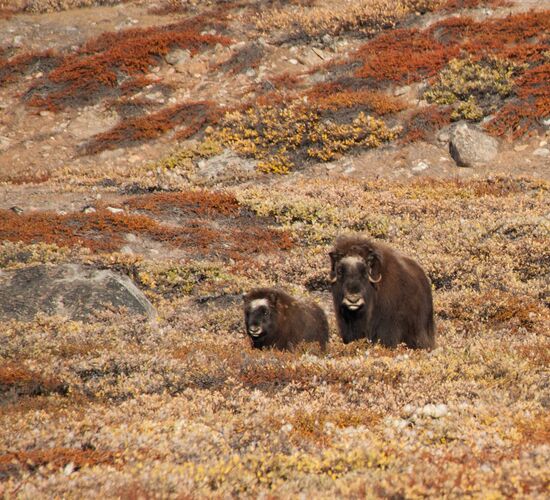
In the morning you are at the mouth of Kong Oscar Fjord, in the strait between the island of Isikaja and the mainland. Until about 30 years ago, Isikaja was connected to the mainland by a glacier, illustrating the region’s changing ice landscape. A landing is planned on the south side at Wegener Halvøya to acknowledge this major explorer. Another option is Antarctic Havn, where musk oxen are often seen. The bay is named after the ship Antarctic, used by the explorer Alfred Gabriel Nathorst in 1899 while searching for survivors of Salomon August Andrée’s failed balloon attempt to reach the North Pole. The day links polar history with tundra landscapes and the chance of early large mammal sightings. Which option is used depends on weather, ice and landing conditions.
Day 4: Ymers Ø, Botaniker Bugt and Blomsterbugt with Teufelschloss
At Ymers Ø the expedition attempts a landing at Karl Jakobsens Bugt near a historic trapper’s hut. A few hundred metres east, at Botaniker Bugt, you can find ruins of Thule culture dwellings from about two centuries ago. A walk in Juluts dal offers good chances to see Arctic wildlife such as musk oxen, Arctic hares and ptarmigan. A scenic transit through Antarctic Sund brings you into the most alpine landscapes of the voyage, with peaks on both sides rising above 1,000 metres. A landing is also planned at Blomsterbugt, which offers strong hiking opportunities. Across the fjord stands Teufelschloss, a striking mountain with impressive layered geology, described by Julius Payer as a cubic rock giant projecting far into the fjord. The day is strongly landscape focused while also including historical traces.
Day 5: Eskimonaes, traces of Thule culture
A landing is planned at Eskimonaes on the south coast of Clavering Ø. The site is associated with Douglas Clavering, who in 1823 encountered a small group of people of the Thule culture here. This group is considered the only living Thule population ever recorded in Northeast Greenland. Traces of their existence are found across Greenland, including indications that they traded and interacted in some form with Norse settlers. A landing allows you to connect the landscape with this cultural historical context, though the exact plan depends on weather and landing feasibility. The day remains centred on a site defined by its significance for human history in Northeast Greenland. Wildlife observation remains possible, as tundra and coastal areas provide habitat for multiple species.
Day 6: Historic islands, Sabine Ø, Germaniahavn and walrus areas
The day focuses on islands linked to polar exploration history. Sir Edward Sabine carried out pendulum experiments on Sabine Ø in 1823, and Carl Koldewey established a station in Germaniahavn in 1869. On the south side lies Hvalros Island, where the walrus population is increasing again. From this day onward you experience continuous daylight while travelling north, changing observation conditions both at sea and on land. Depending on conditions, landings or observation periods may be planned, with site selection guided by ice and weather. The day combines polar history, coastal scenery and the possibility of walrus sightings. Lookout for marine mammals and seabirds remains active, as these waters can be productive.
Day 7: Dove Bugt, possible capes and musk ox region
On entering Dove Bugt, several landing options may be considered depending on conditions. These include Hochstetter Forland, Store Koldewey, named after the second German polar expedition led by Carl Koldewey, and Cape Alf Trolle or Cape Ahrend. Cape Bismarck near Germania Land is another possibility. You are now in musk ox territory and within the southernmost range of some solitary Arctic wolves in Greenland. Daily planning depends strongly on ice and weather, which determine which coastal sections are accessible. This is an expedition day where landings are used when safe windows exist. Alongside scenery, tundra and wildlife observation are key themes.
Day 8: Germania Land, Danmarks Havn and new landing areas
You pass the Sirius Patrol station at Danmarks Havn and plan a landing east of Germania Land, for example at Thomas Thomsen Næs. Depotnæsset on Stormlandet is another option. This region is known for musk oxen and lies within the southernmost range where Arctic wolves may occasionally occur. It is also described as an area where the ships have not operated before, making planning especially dependent on current conditions. The landing site is therefore chosen on location with safety, ice and weather as priorities. The day combines very remote coastal scenery with the possibility of wildlife observation. On board, the next steps toward Isle de France and Northeast Water are prepared.
Day 9: Isle de France and Independence II culture remains
If ice and weather allow, a landing is planned on the south side of Isle de France, first reached in 1905 by the Duke of Orléans on Belgica. The aim is to go ashore at Cape St Jacques, where, under the guidance of an archaeologist from the National Museum of Greenland, you can visit remains of the Independence II culture. Depending on conditions, a landing in the ice free area on the north side of the island may also be possible. The day has a clear archaeological and historical focus while also allowing time to experience the landscape of this remote island. Execution depends on local conditions, as landings here are strongly influenced by ice and wind. Seabird and marine mammal observation remains possible in these waters.
Day 10: Toward Northeast Water, Norske Øer and first time areas
As you sail past Norske Øer, a landing may be possible. You move into areas not previously visited, which makes planning especially flexible. The objective is to reach Northeast Water, a semi permanent open water area in the far northeast of Greenland. Here relatively warm bottom water rises to the surface, increasing productivity. The area is rich in seals, whales, polar bears and seabirds. The day is therefore shaped by navigation, ice observation and attempts to use suitable windows for activities. Wildlife watching continues throughout, as sightings can occur at any time. The exact route depends on ice and weather.
Day 11: Northeast Water, Mallemukfjellet and rare bird possibilities
In the Northeast Water region the expedition attempts to reach Mallemukfjellet at 80°11’ north, the northernmost fulmar colony, where chicks may still be on the ledges. The team also watches for the rare Ross’s gull, which winters in the central polar seas. The day is strongly shaped by conditions in this high Arctic environment, as ice, wind and visibility determine navigation and any landing possibilities. The polynya can provide good conditions for marine mammal observation because open water areas create feeding and movement corridors. Planning remains flexible, with a focus on observation and reaching the stated objectives if safely possible. This is among the northernmost and most remote sections of the voyage.
Day 12: Along the pack ice edge, marine mammals and seabirds
You continue southeast along the outer edge of the pack ice. Observation of Arctic marine mammals and seabirds remains central, as many species use the boundary between ice and open water. The ice landscape is constantly changing, with floes, edges and open leads shifting with wind and currents. The day is therefore shaped by navigation and lookout, with routing adjusted to ice conditions. Sightings of seals, whales or polar bears are possible but not predictable. The ice edge often offers strong photography opportunities as light and ice structure create changing scenes. This day also supports the transition toward the open sea crossing to Spitsbergen.
Day 13: Crossing to Spitsbergen, Greenland Sea and Poolepynten option
After leaving Greenland’s coast and pack ice behind, you are on open sea. The ship sails east across the Greenland Sea, following the northernmost branch of the warm Gulf Stream toward Spitsbergen. Migrating whales may accompany the route and sightings remain possible. If time allows, a late afternoon landing may be attempted at the walrus haul out at Poolepynten. Whether this is feasible depends on schedule and conditions. The day is planned as a longer passage, also supporting preparation for arrival in Spitsbergen and disembarkation the next day. This completes the arc from Northeast Greenland back to Svalbard waters.
Day 14: Longyearbyen disembarkation
You arrive in Longyearbyen. The package ends after breakfast on board with disembarkation. You may then explore the town further or prepare for onward travel, for example a flight to Oslo.
Included Northeast Greenland Extreme
- Free use of rubber boots and snowshoes
- Complimentary Wi-Fi: each guest receives 1.5 GB of data per day, renewed every 24 hours
- Complimentary Dopper water bottle for use during and after your expedition
Additional Information for Expedition Cruises: The itinerary and route described are provided as examples only and may be adjusted or changed at any time due to weather, ice and tidal conditions, as well as for safety reasons. Specific landing sites, locations or route sections therefore cannot be guaranteed. The captain and expedition leader will make all final decisions regarding the route, landings and daily programme on site. Wildlife sightings cannot be guaranteed. Landings and Zodiac excursions depend on local conditions and regulatory requirements. Optional activities have very limited availability; we recommend booking them well in advance, often weeks or months before departure, as they may be fully booked by the time of travel; their operation depends on weather, ice and safety conditions as well as minimum participation. Polar regions are remote and dynamic natural environments, therefore programme changes or delays may occur.


.jpg_Julian Bourse.jpeg)


.jpg_Ignacio Marino.jpeg)




.jpg_Martin van Lokven.jpeg)
.jpg_Martin van Lokven.jpeg)
.jpg_Martin van Lokven.jpeg)


These pictures provide a general impression of our local partner and the surrounding area. Please note that selected tour may differ from these pictures.
All Reviews of Oceanwide Expeditions
●●●●● 4.6 of 5 Stars (160 Reviews) on
Help us and submit a new review
Please select between 1 to 5 to review the operator* ○○○○○
Mon. 06.09.2027 - Sun. 19.09.2027
14 days from Akureyri, Iceland
Available on request
14 days from Akureyri, Iceland
Available on request
from €7.550,-


Available on request
from €7.550,-
Deck: 3 12m² Quadruple Occupancy Double Porthole


Available on request
from €10.600,-
Deck: 3 & 4 11m² Twin Beds Double Porthole

Available on request
from €11.650,-
Deck: 5 17m² Twin Beds Standard Window

Available on request
from €12.450,-
Deck: 5 17m² Twin Beds Standard Window

Available on request
from €13.750,-
Deck: 5 18m² Twin Beds Standard Window
All prices per person in double or multi-bed category. Single room surcharges, children's price advantages etc. on request.
Fixed travel dates, additional days on demand.
Fixed travel dates, additional days on demand.